Ok, this is cheating a bit – in the sense that these herbs are not from round my way – but rest assured that they can all be found within the city limits.
I have just returned from my first guided forage led by the fantastic Dermot Hughes from Forage Ireland. The forage took place at Carnfunnock Country Park, just outside Larne, about 22 miles north-east of Belfast. Given that Dermot’s theme for the event was salad leaves, I thought that I could reasonably expect to get my lunch out of it. I wasn’t to be disappointed in this regard, however I was also keen to find out what medicinal value my lunch held.
Lime or linden
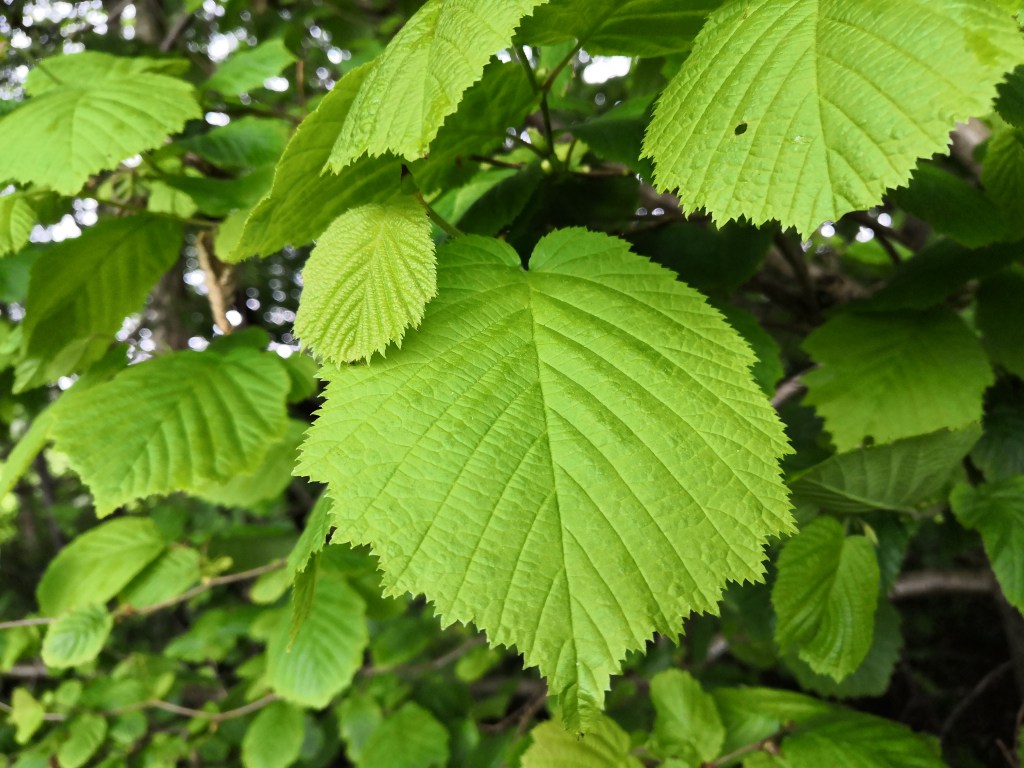
My wee fey basket by my side, I was feeling slightly self-conscious; but this disappeared within one minute of leaving the visitor centre where our group met, when we encountered the first of many lime, or linden, trees ( various species in the Tilia genus). I have seen this tree a million times without ever truly seeing it, if you see what I mean. Its serrated, heart-shaped leaves are everywhere, and show all the signs of being a city herbalist’s friend. The leaf of the tree is edible, and has a mild, almost sweet flavour – reminiscent of a butterhead lettuce. I am reliably informed (by the equally fantastic Clare McQuillan) that it provides good structure for homemade dolmades. Sadly, my leaves never made it to this higher gastronomic state of being; my basket of leaves ended up as the accompaniment to a humble mushroom omelette. But more on this later.
Lime flowers can be made into a tea or tincture; useful for colds, flus, and respiratory conditions. According to Wildfood UK, lime tea could possibly prevent the hardening of arteries, and lower high blood pressure, but I can neither confirm nor deny. I was a wee bit early (late May) for this as the blossom doesn’t appear until July round these parts, but I’m looking forward to reporting back to you on this.
At this point, I should mention that we found a lot of edible/medicinal (medible?) plants that afternoon. So, mindful that this is a blog post, not a novel, it’s probably better that I briefly list the rest, and we can have a deeper dig into each of them at a later stage.
Bittercress (Cardamine hirsuta)
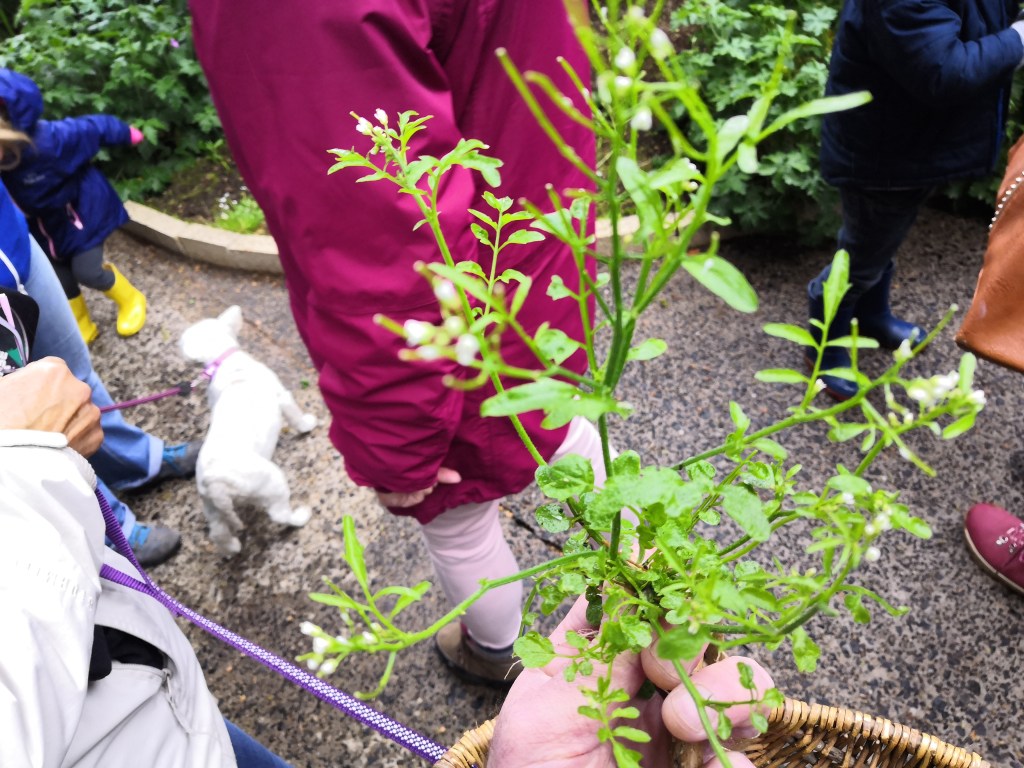
The leaves, roots and stalks can be eaten raw or cooked, and have that sulphury, brassica-like flavour. It contains glucosinolates – useful for the removal of carcinogens from the body – and also contains vitamin C, beta-carotine, calcium, magnesium, antioxidants, and sulfur-containing compounds that boost the immune system.
Sorrel (Rumex acetosa)
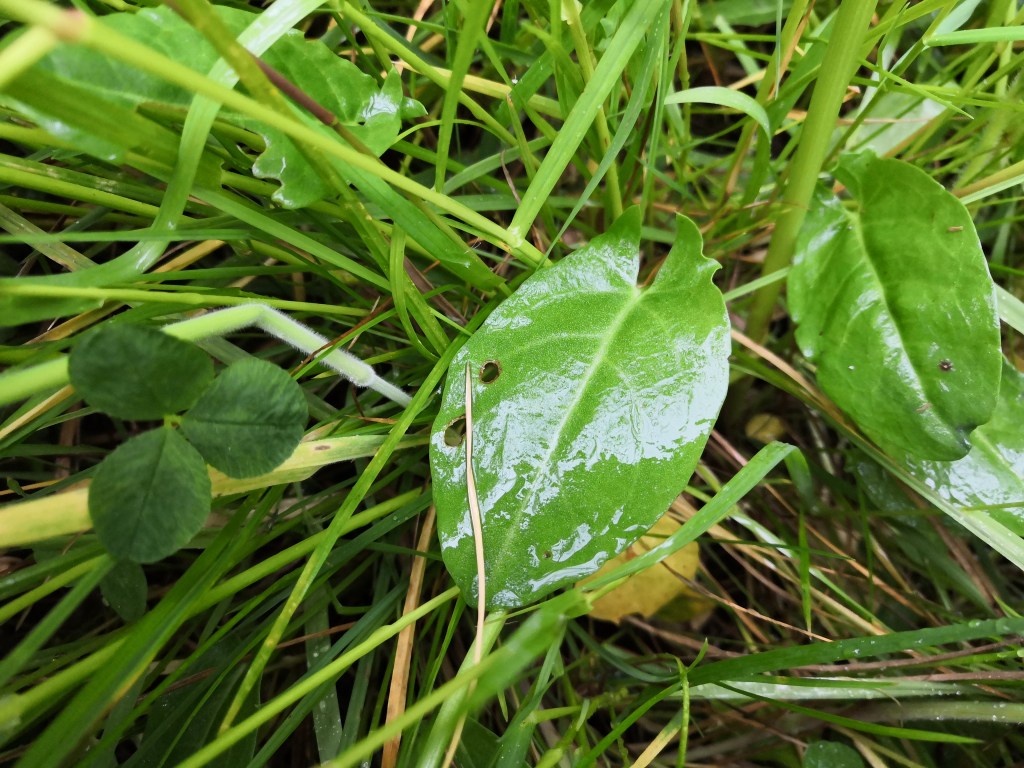
Tasting this plant was a bit of a revelation – a really delicious leaf, with a sharp, citrussy flavour, which can be eaten raw or cooked. It grows in parks and gardens, meadowland, and woodland – anywhere there’s grass really – and is easily recognisable by the two prongs, or tails, at one end of the leaf. It contains vitamins A, B1, B2, and B9, and is packed with vitamin C. It is also rich in potassium, calcium, phosphorus, sodium, and iron. The fresh or dried leaves are astringent, diuretic, and laxative; so I wouldn’t eat too many of them, unless you’re keen to spend the evening on the toilet. The flowers, roots and seeds can all be used medicinally.
Plantain (Plantago lanceolata)
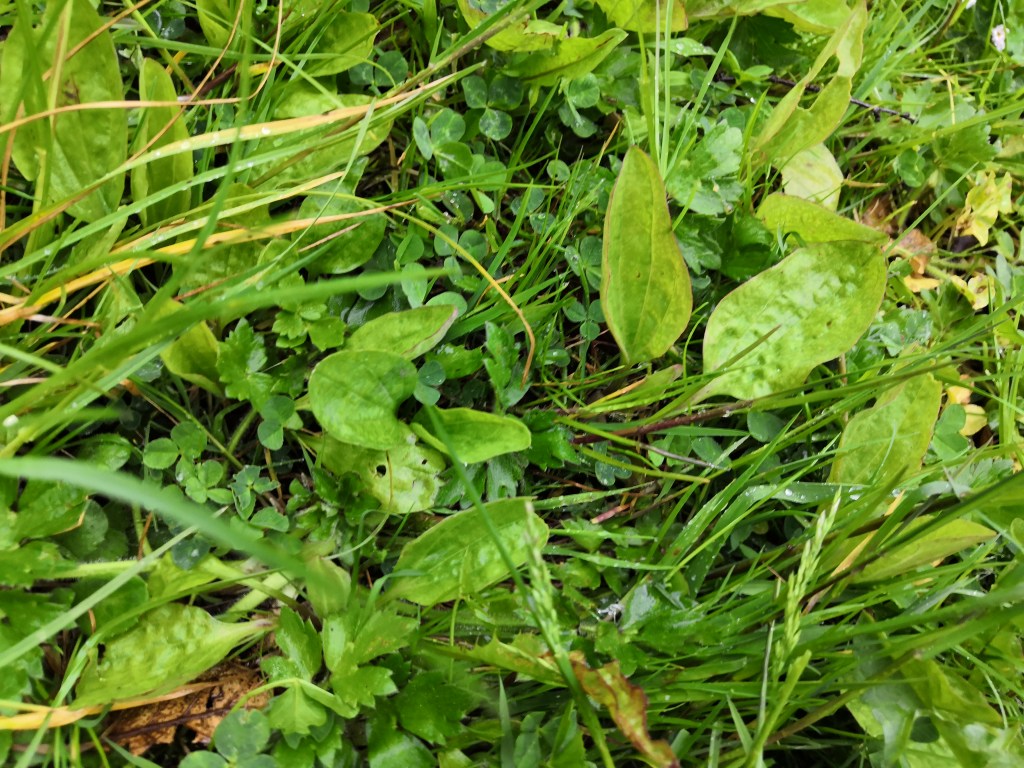
The ribbed, boat-shaped leaves in the picture above belong to the noble ribwort plantain, a plant that is found in parks, roadside verges, hillsides, and back gardens all over the land. It is one of those plants whose ubiquity has rendered it invisible; but our ignorance of which – similar to that of the dandelion and the nettle – is bordering on criminal. It is anti-inflammatory, analgesic, antioxidant, slightly antibiotic, antihistamine, and antifungal. It has a moistening, cooling effect on the skin due to its viscous secretion when squeezed (mucilaginous), and is great for drawing toxins. So a plantain poultice would be good for, say, bee stings, swellings, grazes and cuts, and wound infections.
And I have a theory that the plantain leaf has been misidentified as the dock. When I was a kid, it was common knowledge that you rubbed a dock leaf on your skin when you got stung by a nettle. Wrong leaf I reckons; move along to the heavily anthistamine plantain there kiddo!
On top of all this, when you consider that plantain can treat ulcers and digestive tract complaints like IBS etc, oral complaints such as gum inflammation and ulcers, and also bronchial conditions, then you have a very cool plant on your hands. I will return to this, I’m sure.
Hazel (Corylus avellana)
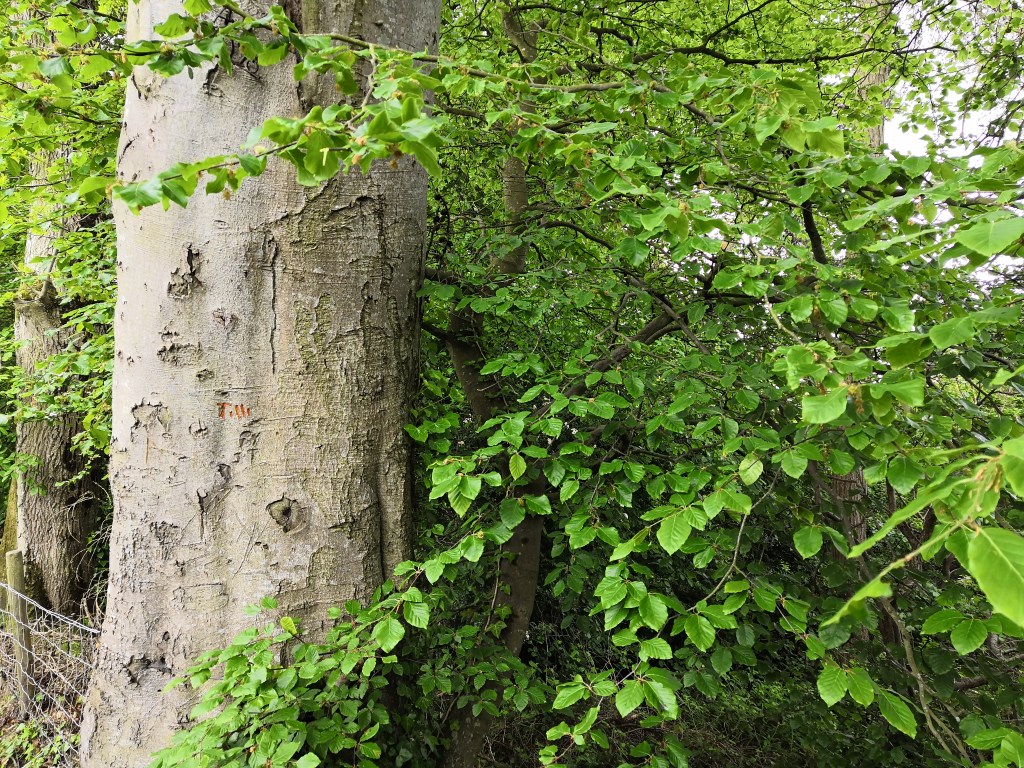
Familar to most people as the parent of a delicious nut. Its identifiable characteristics were not familiar to me until today though, I’m embarrassed to say. Turns out, it grows abundantly throughout Belfast’s streets and parks. As with many nuts, the hazelnut is packed with vitamins, minerals, fiber, protein, healthy fats, and antioxidants. The bark, leaves, seeds and oil can also be used medicinally.
Common vetch (vicia sativa)
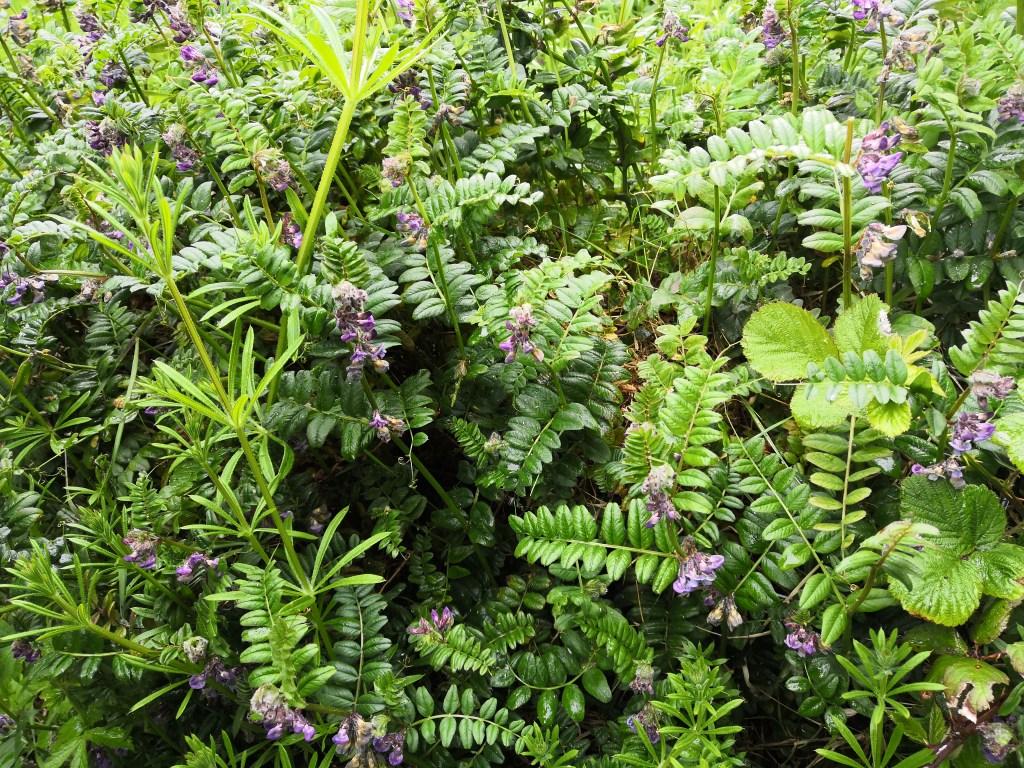
This plant is a legume; a fact that can easily be confirmed by the pea-like flavour of its leaves and flowers. There doesn’t seem to be much literature about the medicinal properties of vetch, but Sarcraft.com states that, ‘it has noted antiseptic properties when used externally as a poultice or internally as a tea. If you have an open wound and you’re concerned with infection, and there’s nothing better to use, a vetch poultice will do. It also is known for being useful for treating skin issues such as eczema.’ This will require further investigation.
Enter the shroom
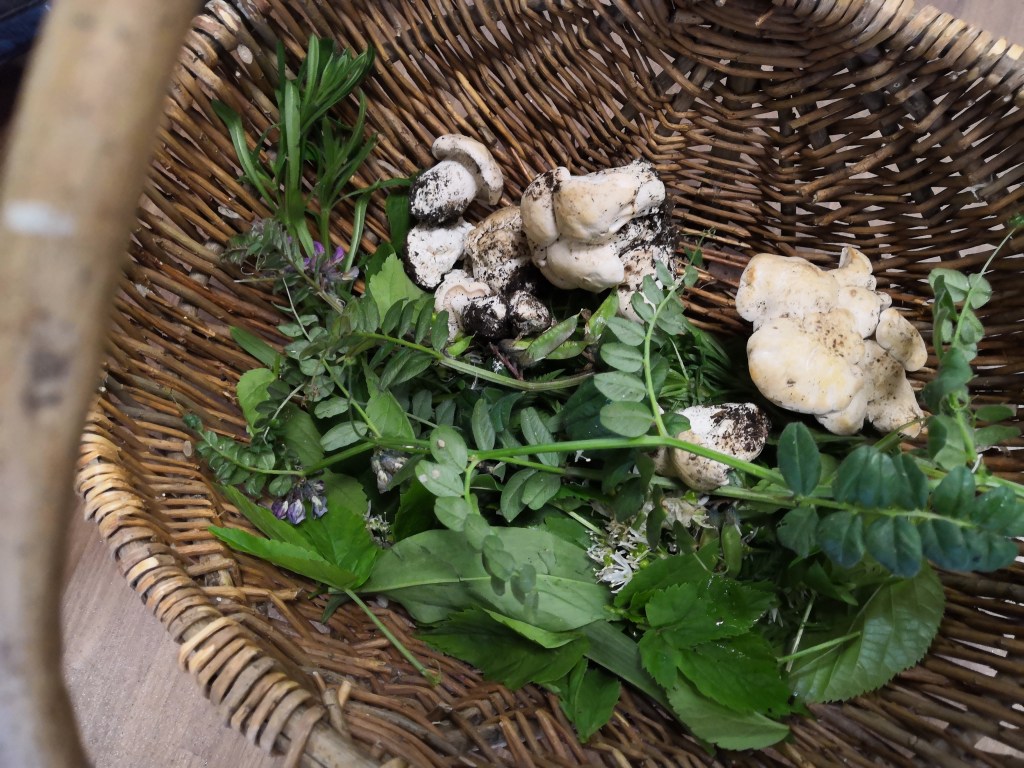
A successful forage and a lovely dander then; but just when I thought it was all over, Carnfunnock had an extra surprise for me. As we returned to the visitor centre where we started, the lass I was chatting to spied dozens of St George’s mushrooms amongst the woodchip. The St George’s (Calocybe gambosa ) is so named because it appears, with startlingly regular accuracy, on St George’s Day (April 23rd), and for a few weeks after that. It is quite easy to identify since it is practically the only mushroom available in spring, or that grows in rings. It also has a good, strong, earthy smell.
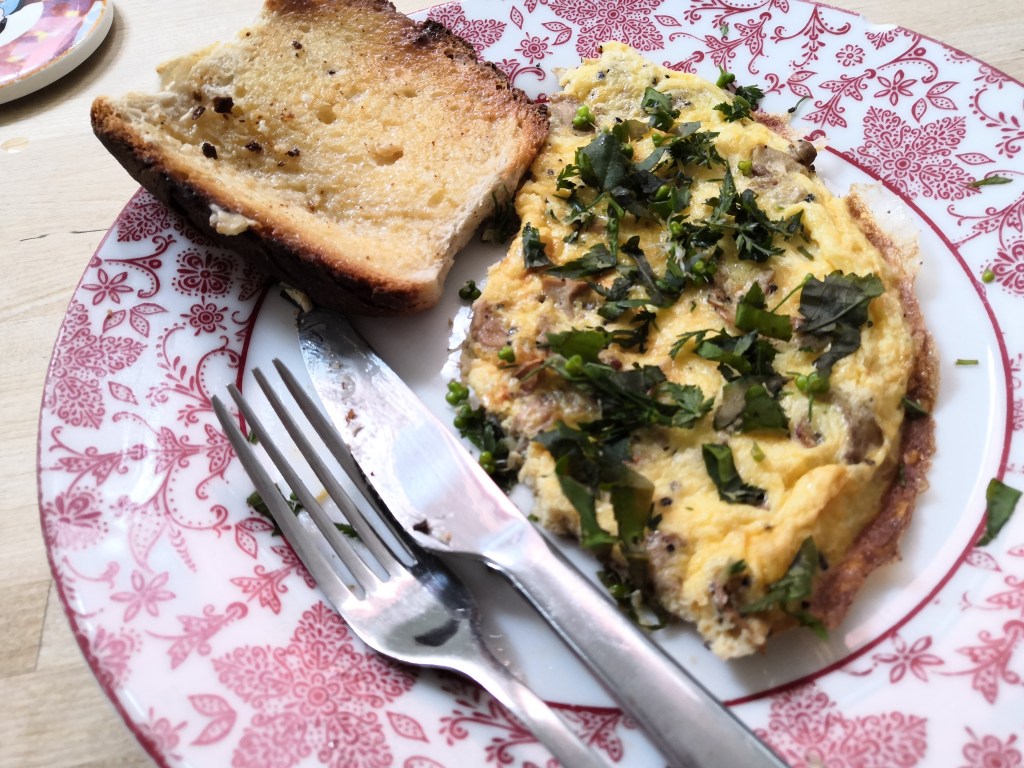
And that was lunch pretty much in the bag. I did entertain the notion of garlic mushrooms on toast, but in the end, I went for an omelette, which showcased both shroom and leaf alike.
Honourable mentions to chickweed, pheasant berry, cherry birch, horsetail, cow parsley, ground elder, and beech – all encountered during the forage, but not gathered and/or documented. I will try to get back to some of these. So much to do, so little time…
The purpose of this post is not merely to brag about my lovely day out, but to demonstrate that we can find nutritious, delicious plants all around us without really breaking a sweat. And we can most definitely do so in a city.
I mean, this stuff is everywhere.
If you are even half interested in this subject – and I assume you are, or you wouldn’t have made it this far down the post – I would strongly encourage you to pick just one or two plants, familiarise yourself with their appearance and habitat, and just get out there for a hoke. I guarantee that the thrill of correctly identifying a herb for the first time, and gathering a quantity of it with a view to eating or drinking it, will have you itching to go shopping for a wee fey basket of your own.
 Herbal Urban